

mental health statistics
Source: Australian Institute of Health and Welfare
Source: Heathdirect.gov.au
Source: National Survey of Mental Health and Wellbeing
Source: Mission Australia
Source: Suicide Prevention Australia
Source: Mental Health Commission of New South Wales
Source: Australian Institute of Family Studies, 2025
Source: Mission Australia
Source: Australian Institute of Family Studies
negativity
With rates of mental illnesses, bullying, and suicide steadily rising, there is an increasing community concern for the mental health and wellbeing of young Australians.
Children today are inundated with information on topics such as anxiety, depression, bullying, suicide, self-harm, and other mental health issues. In combination with this, there is a glaring absence of positive messages.
The Murdoch Children's Research Institute states that "With about 50% of mental health disorders beginning before the age of 14 years, prevention and early intervention are paramount if we want to reduce a lifetime prevalence of mental health disorders and allow children to live their best possible lives".
Science shows that acts of kindness and compassion increase wellbeing and improve self-esteem for not just young Australians – but for everyone. At the b kinder foundation, we want people to know their actions matter, and that we each have the power to make a difference.

bullying
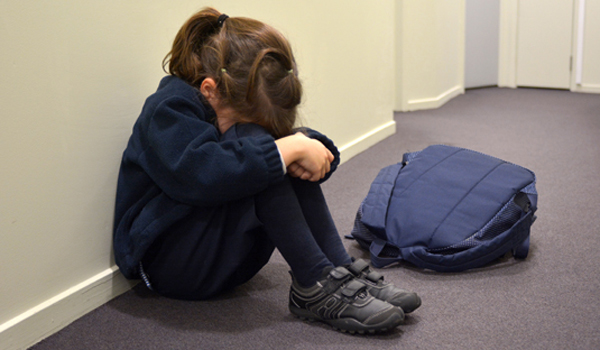
Bullying can be physical, verbal or social.
Data from the Longitudinal Study of Australian Children (LSAC) in 2016 shows that 7 in 10 children aged 12–13 experienced at least 1 bullying-like behaviour within a year. According to the Trends in International Mathematics and Science Study (TIMSS) 2015, 1 in 5 Year 4 students experience bullying on a weekly basis.
Data from LSAC in 2016 found that almost half (46%) of children aged 12–13 who experienced at least 1 bullying-like behaviour within a year also used bullying-like behaviours against another child. Frequent school bullying was highest among Year 5 (32%) and Year 8 (29%) students.
Research highlights changes in bullying behaviours, with cyberbullying emerging as an increasingly prevalent form alongside traditional bullying methods.
testimonials
"The influence and lasting impressions that Billie has left for our future generations can only be described as an inheritance of blessings for all children."
Amanda Camm, Whitsundays MP
"I have searched for a wellbeing program that not only serves to educate our students, but inspires them to take action, to flourish and to use their voice for good. Across the globe we are witnessing an ever-increasing amount of anxiety, online bullying, depression, helplessness and dysregulation. We need to empower children with strategies to help them develop an enriched sense of wellbeing, belonging and self-esteem."
Nicole Gruman, Vice Principal, Moriah College
"They are of great help in initiating discussion surrounding emotions that can be difficult for the young to communicate and they do this in a charming and creative way that encourages clarity, comfort and kindness and allowing open, free expression and valid self-introspection.
The b kinder workbooks are a daily personal reminder to walk, speak and think kindness."
